
Tea Knowledge for Better Sourcing
Practical insight into tea quality, production, certification and export readiness.
How should I choose between Chun Mee 41022 and 41022A?
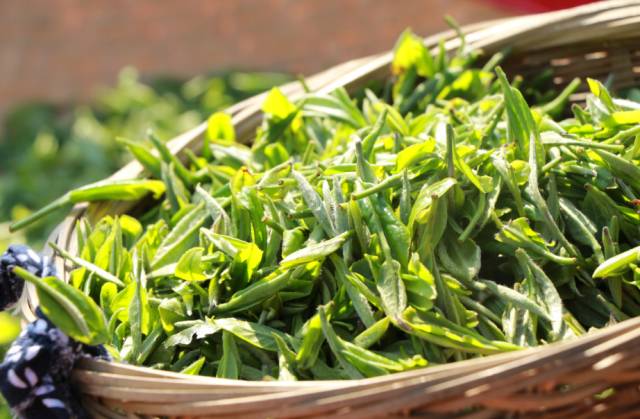
hun Mee (Zhen Mei) 41022 is the standard customs code for the classic Chinese export green tea Zhen Mei. 41022 and 41022A belong to the same basic Zhen Mei grade series. The suffix “A” does not indicate absolute quality; it should not be simply assumed that A is better than the version without A. Selection must consider a combination of actual sieve specifications, dry tea samples, cupping sensory evaluation, target cost, and end customer requirements.
Industry background: 41022 is the basic Zhen Mei code; the suffix A is a custom addition by factories or traders and is not a mandatory national standard grading symbol. Different tea factories and exporters define “A” differently, which is the main reason why quality cannot be judged by the letter A alone. In some factories, A represents a carefully selected batch with fewer broken leaves; in others, it may just indicate batch or minor sieve adjustments. Some suppliers even treat 41022A as a high-volume version, and its actual quality can be higher or lower than regular 41022.
1. Common industry differences between 41022 and 41022A
41022:
Sieve specifications: Standard 41022 Zhen Mei undergoes regular sieving, allowing a reasonable amount of small leaves, short strips, and a few dusty particles. The leaf uniformity is medium. It is the mainstream basic Zhen Mei produced in large quantities with a well-established supply chain.
Sensory characteristics: Noticeable chestnut aroma, rich taste, high tea soup concentration; some batches may have slight coarse or aged notes, with relatively more broken leaves.
Price positioning: Baseline price, strong cost-performance, often used for bulk blends, tea bags, common teabags, restaurant brewing, and large-scale exports.
41022A (Key point: A has no global standard definition)
Scenario 1 (positive definition): In some factories, A = secondary wind-sifting/sieving that removes more dust and small leaves, improves leaf integrity, makes appearance more uniform, strictly controls stems and yellow leaves, and results in better-looking dry tea.
Scenario 2 (neutral definition): A simply denotes a different production batch, season, or minor sieve adjustments. Internal quality is almost the same as regular 41022, with only slight physical sifting differences.
Scenario 3 (negative/risk): A few suppliers use 41022A purely as a marketing label to meet customers’ perception that “A grade is higher.” In reality, the raw materials and cupping performance may not even match high-quality regular 41022.
Brief summary: A mainly refers to the appearance and sieving of dry tea, not necessarily an upgrade in taste, freshness, or leaf tenderness. Sometimes A just looks better, while regular 41022 can taste stronger and have more aroma.
2. Five Core Dimensions for Selection
2.1 Physical Dry Tea Samples: Check Screening Specs and Physical Indicators
Get parallel samples for comparison, focusing on:
- Leaf integrity: uniformity in length and thickness; yellow leaves, stems content; proportion of broken leaves and powder;
- Color: whether it’s gray-green and smooth, any burnt or red leaves;
- Screening report: verify sieve residue data (material on/under different mesh sizes).
Even with the same label, different factories can have huge differences in screening. Some 41022 without the A version may be cleaner than other factories’ 41022A. Label is just a reference; the physical sample is the primary basis.
2.2 Cupping Results (Most crucial, determines drink quality)
Perform standardized cupping with fixed tea amount, water temperature, and steeping time. Compare:
- Aroma: chestnut, grassy, roasted, coarse/old notes;
- Liquor color: brightness of yellow-green, clarity;
- Taste: concentration, freshness, bitterness, aftertaste, durability;
- Leaf bottom: tenderness, proportion of older leaves.
Typical situations:
- Scenario ①: 41022A looks great but taste is weak; regular 41022 has more breakage but strong, full-bodied, aromatic brew. Customers making tea bags or serving in restaurants may actually prefer the version without A.
- Scenario ②: 41022A optimized in screening can be excellent in both look and taste, then A is preferred.
The A label cannot reflect tea liquor performance; cupping is an indispensable step to distinguish intrinsic quality.
2.3 End Customers & Downstream Usage
Choose based on use, not blindly picking a seemingly higher-grade A:
- Tea bags, restaurant brewing, blending raw materials: Focus on liquor strength and flavor stability, not the look of dry leaves. Often 41022 without a suffix is better, even if it has more broken leaves, packaging and brewing aren’t affected, and costs are lower; no need to pay extra for the A version for appearance.
- Loose tea retail, transparent packaging, gift boxes, dry tea display: Customers see the dry tea visually, so uniform leaves with fewer fragments matter. Here, the screening advantage of 41022A can be valuable, but the sample still needs confirmation; not all 41022A meets the standard.
- Overseas import customers: Some overseas buyers historically define 41022A as their specified standard. In such cases, follow the customer’s reference sample rather than the label itself. Always send samples for confirmation with new clients.
2.4 Target Price & Cost Budget
Market trend: 41022A generally has a slightly higher price than 41022 due to extra screening, leading to loss and processing costs.
Cost balance:
- For cost-effective bulk tea without strict appearance requirements, good 41022 can control cost.
- If budget allows and good-looking dry tea is needed, then consider if 41022A’s extra cost is worth it – make sure the quality improvement matches the price difference.
2.5 Supply Chain Batch Stability
Zhenmei is seasonally produced; spring, summer, and autumn tea raw materials differ. Quality of the same label can fluctuate across batches.
Even in the same factory, this year's 41022A is fine, but next season's 41022A might not be the same in every way as the previous batch, so choosing a fully qualified company can save you 90% of the hassle.
3. Practical Decision-Making Process
3.1 Don’t assume that 41022A is better in quality just because of the ‘A’ suffix;
3.2 Request parallel samples from the same quarter: 41022 & 41022A, and also ask for sieving parameters;
3.3 Compare the dry tea appearance, complete standardized cup tasting, and record liquor color, aroma, and taste;
3.4 Calculate the price difference per kilogram between the two and evaluate whether the improvements in version A justify the premium;
3.5 Combine with the client’s end-use (tea bags / loose tea / export) and their reference samples to determine the final choice;
3.6 Before bulk production, confirm that the bulk sample is consistent with the previously approved small sample.
4. Key Takeaways
4.1 The ‘A’ in 41022A is a trade/factory custom mark, not an internationally mandated grade, and does not necessarily indicate higher quality. Do not judge solely based on the letter; ‘A’ mostly reflects differences in sorting appearance, and the raw material tenderness and tea liquor taste are not necessarily better than regular 41022;
4.2 Complete selection logic: physical dry tea sieving → standardized cup tasting → cost and price calculation → downstream client usage scenario → batch stability, judged comprehensively from multiple perspectives;
4.3 The best is what suits your needs: if tea liquor strength and cost are prioritized, the non-A 41022 is often the best choice; if uniform and visually appealing dry tea appearance is required, then check if 41022A meets expectations.