
Tea Knowledge for Better Sourcing
Practical insight into tea quality, production, certification and export readiness.
How to Choose Gunpowder Tea Grades Based on Market Positioning
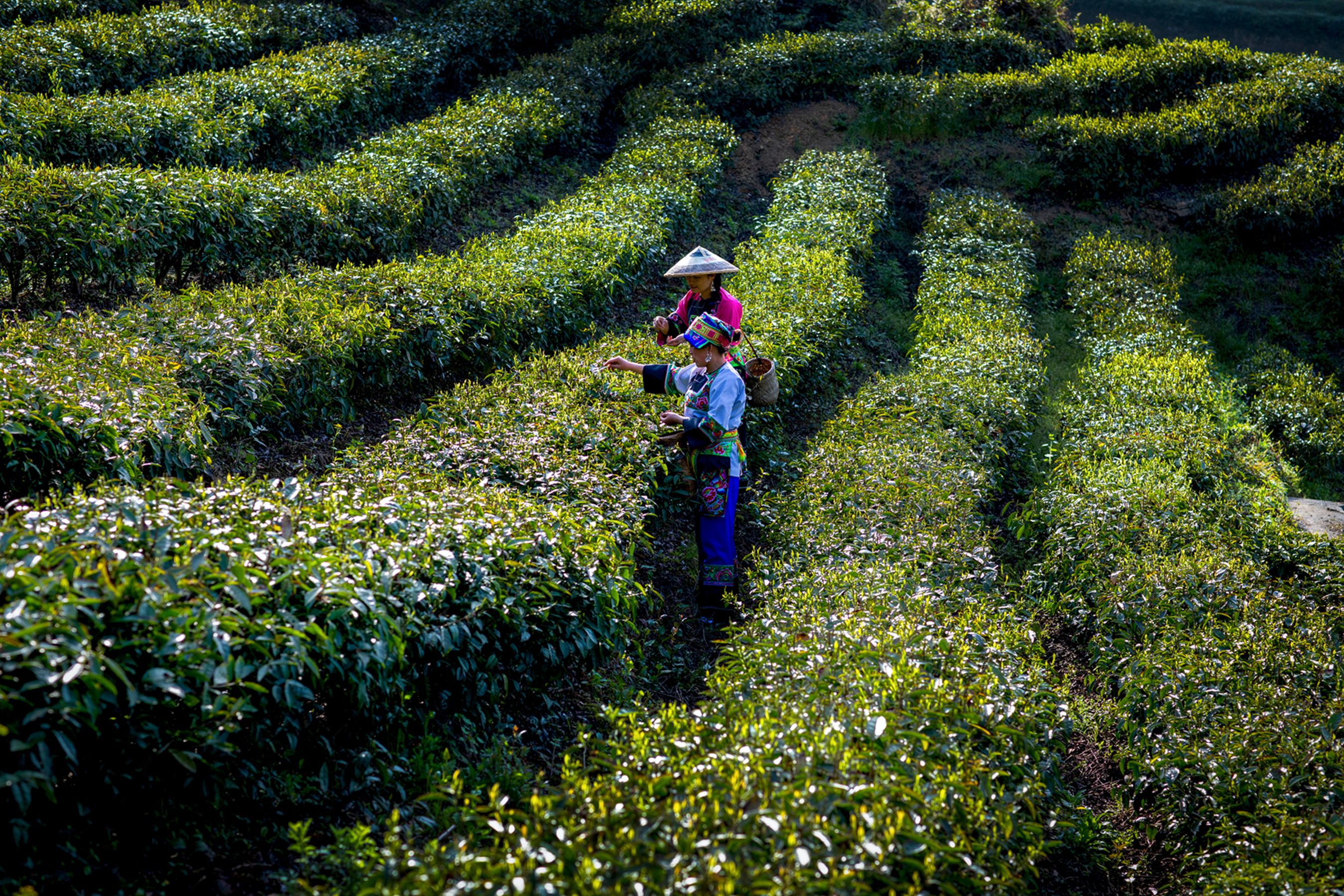
How to Choose Gunpowder Tea Grades Based on Market Positioning
Applicable Types: Organic / Conventional Gunpowder, Core Types: 3505A, 3505B, 9375; can also extend to lower grades like 9374 (coarse pearls). Core Principle: Don’t focus on price first—figure out the end drinking scenario first. The value points of Gunpowder tea fall into two categories: one focuses on dry tea appearance, delicate aroma, and pure drinking taste (Europe & US retail); the other focuses on brew color intensity, boil-resistance, and cost (North African / Middle Eastern mint tea market).
Below, we break down quality requirements, recommended grades, pricing strategies, and risk points across six types of channels.
1. High-End Retail (Boutique Supermarkets, Organic Stores, Independent Tea Brands, mainly in Europe/North America)
Market Positioning:
Targeting consumers who value packaging presentation, pure tea-drinking experience, and organic certification; customers will see the dry tea leaves directly and drink it plain after brewing without sugar or mint. Appearance, cleanliness, and delicate aroma are the top selling points.
Quality Requirements:
Leaves: round and tight, uniform in size, dark green with frost; flat leaves, yellow leaves, stems, and dust must be minimal.
Aroma: clean chestnut scent with a light sweet grassy note; strong green taste, hay smell, or burnt smell are prohibited.
Taste: gentle astringency, noticeable sweet aftertaste; suitable for drinking straight, clear yellow-green liquor.
Physical & Certification: Organic channels require EU/USDA organic certification; pesticide residues must strictly meet EU standards; moisture well controlled, not prone to oxidation.
Recommended Grade: Organic 3505A (first choice); regular non-organic 3505A.
3505B can be used occasionally as a secondary entry-level product, but 3505B lacks uniformity and is not suitable for high-end main SKUs.
Pricing: highest price range; customers are willing to pay a premium for beautiful appearance, clean aroma, and organic certification. Cost is not the main concern, but quality stability is crucial; bulk must match the sample.
Main Risks: Do not replace 3505A with 3505B or 9375. Uneven dry tea leaves and many yellow leaves give a poor unboxing impression; overly bitter taste leads to negative reviews when drunk plain.
2. Mass Retail (Supermarket Private Labels, Budget Tea Shelves)
Market Positioning:
Targeting ordinary consumers, some drink plain, some add lemon or sugar; packaging mostly in bags, price-sensitive, but still expect acceptable leaf appearance. Balance appearance, taste, and cost.
Quality Requirements:
Leaves: basically round, slight size differences allowed; some yellow tips acceptable, but flat leaves and stems must be minimal.
Aroma: normal grassy chestnut scent, no off-flavors; no need for high-end delicate layers, but rough old hay smell is unacceptable.
Taste: moderate astringency, smooth entry; clear tea liquor is enough, no need for very strong concentration.
Recommended Grade: Organic / Conventional 3505B (first choice).
If the budget is very tight, lower 3505B batches can be considered, but 9375 is not recommended for loose-leaf retail; 9375 is coarse and gives a poor unboxing impression.
Pricing: mid-range, value for money is the priority; price pressure is obvious, need to find competitive quotes within acceptable quality range.
Main Risks: Suppliers may provide low-quality 3505B, mixed with dust and yellow leaves; appearance varies between batches, causing complaints. Focus on uniformity during evaluation.
3. Food & Beverage Supply (Hotels, Cafés, Chain Tea Shops, Whole Leaf Brewing)
Market positioning:
Restaurants / hotels brewing green tea in pots, using a relatively large amount of tea per serving. Guests either drink it plain or add lemon. Focus is on consistent color, clean aroma, and avoiding harsh bitterness, while keeping costs in mind.
Quality Requirements:
Leaves: Don’t need to be as perfectly round and tight as high-end retail, but shouldn’t have too many broken bits (broken bits can clog filters and make the tea cloudy).
Aroma: Stable, gentle chestnut fragrance, no off-flavors.
Taste: Should hold up well to multiple infusions; one pot shouldn’t turn bitter too quickly.
Recommended Grades:
High-end hotels: 3505A
Regular chain restaurants: 3505B
9375 generally not recommended for pot brewing in restaurants: too astringent and poor plain tea experience.
Price requirements: Moderate, with priority on batch stability. Restaurants dislike large aroma or bitterness differences between batches.
Main risks: High broken-leaf content can make brewing cloudy and clog tea filters.
4. Tea Bags (Tea bag, broken pearl tea filling)
Market Positioning:
Tea bag products where consumers can’t see the appearance of the dried tea; the focus is on infusion speed, liquor color, and aroma—appearance of the granules is not important.
Quality Requirements:
No need for whole pearls, some broken pearls are allowed; the degree of breakage should be controllable, and there shouldn’t be too much dust (dust can pass through the filter paper and make the tea cloudy).
Consistent infusion speed, achieving the standard color within 3 minutes; aroma should be clean, without rough or stale taste.
Recommended Grades:
High-end organic tea bags: 3505A broken leaves
Standard tea bags: 3505B broken pearls
Economy tea bags: 9375 broken pearls
Tea bags can use broken pearl tea; whole pearls are not necessary. When purchasing, broken pearls can be negotiated separately for a better price.
Pricing Requirements: Cost-oriented. Appearance premium can be completely cut off as long as the internal quality is acceptable.
Ma
5. Blending Raw Materials (Blending, mixing with Chun Mee / other green teas)
Market positioning:
Used as a blending component to adjust tea liquor strength, color, and aroma; not sold as a standalone product. Buyers mix Zhu tea with Chun Mee, other green teas to create custom flavors.
Quality requirements:
Depends on the blending goal:
To enhance liquor color intensity: 9375 (fast release, deep yellow liquor)
To increase mild chestnut aroma and smooth mouthfeel: 3505A / 3505B
Key points for blending raw materials: Stable internal quality, minimal variations in color and aroma between batches; appearance is not important.
Recommended grade:
Flexible - 3505A/B for high-end blends; 9375 for budget blend base.
Price requirements: Cost priority, select according to blending target quality.
Main risks: Large batch quality fluctuations, inconsistent flavor in each blend; must lock in suppliers for consistent samples.
6. Bulk Distribution / North Africa & Middle East Mint Boiled Tea (Core market for Moroccan mint tea)
Market positioning:
B2B bulk wholesale, used by clients for mint tea, with a lot of sugar and mint; rarely consumed plain. This is the largest traditional market for Zhu tea.
Quality requirements:
Granule appearance is the lowest priority, coarse round or flat leaves, a few yellow leaves are acceptable; uniformity requirement is relaxed.
Core indicators: High tea liquor concentration after boiling, fast color release; tea flavor remains after long high-temperature boiling.
Aroma: Coarse grassy scent is acceptable; no delicate chestnut aroma needed.
Taste: Naturally astringent, but lots of sugar and mint will neutralize bitterness; clients want strong yellow liquor after brewing.
Recommended grade:
Organic / Conventional 9375 (first choice); for tighter budgets, 9374 coarse pearls. Not recommended to use 3505A/B for bulk mint boiled tea: quality is overkill, cost too high, not cost-effective.
Price requirements: Highly price-sensitive, bulk FOB low-price oriented. High volume, seeking the lowest feasible cost.
Main risks: Some 9375 batches have strong hay flavor, causing off-flavors when brewed with mint; excessive dust leads to sediment after boiling. Need proper boiling tests (not the usual gaiwan brewing evaluation).in Risks: Too much dust causing tea bag leakage; coarse or old raw materials causing long-lasting bitterness.
Market channels | Preferred Pearl Tea Grade | Key Points for Choosing | Unimportant metric |
High-end whole leaf retail | 3505A | The grains are round and even, the aroma is delicate, and it goes down smoothly when drunk straight. | — |
Public Supermarket Retail | 3505B | Balancing looks, taste, and cost | Ultimate particle roundness |
Brew in a catering pot | 3505A (high-end store) / 3505B (regular dining) | Stable aroma, low crumbs, durable when brewed | Frosty appearance |
tea bag | Fragment 3505A / Fragment 3505B / Fragment 9375 | Speed of serving, clean aroma | Complete ball shape |
Blending ingredients | Use 3505A/B/9375 as needed | Stable texture, controllable soup color | Appearance of dry tea |
Bulk Mint Tea (North Africa) | 9375 | High concentration after cooking, colors quickly | Uniform granules, pure drink bitterness |
General Purchasing Selection Recommendations (in line with Zhenmei's procurement system)
1. Sample evaluation uses two separate testing methods: pure drinking gaiwan evaluation (retail / catering) vs. boiling tea test (North African mint market). You can't judge using just one brewing standard.
2. Organic pearl tea of the same model has a noticeable premium over regular pearl tea. Only choose the organic version when the target customer explicitly requires organic certification.
3. Regardless of grade, samples must be sealed after evaluation; mass goods should be checked against the sealed sample for acceptance.
4. Don't substitute across grades: for example, passing off 9375 as 3505B to retail customers may save costs short-term but will lead to lots of complain