
Tea Knowledge for Better Sourcing
Practical insight into tea quality, production, certification and export readiness.
Matcha : How to Understand Sieve Size and Fineness?
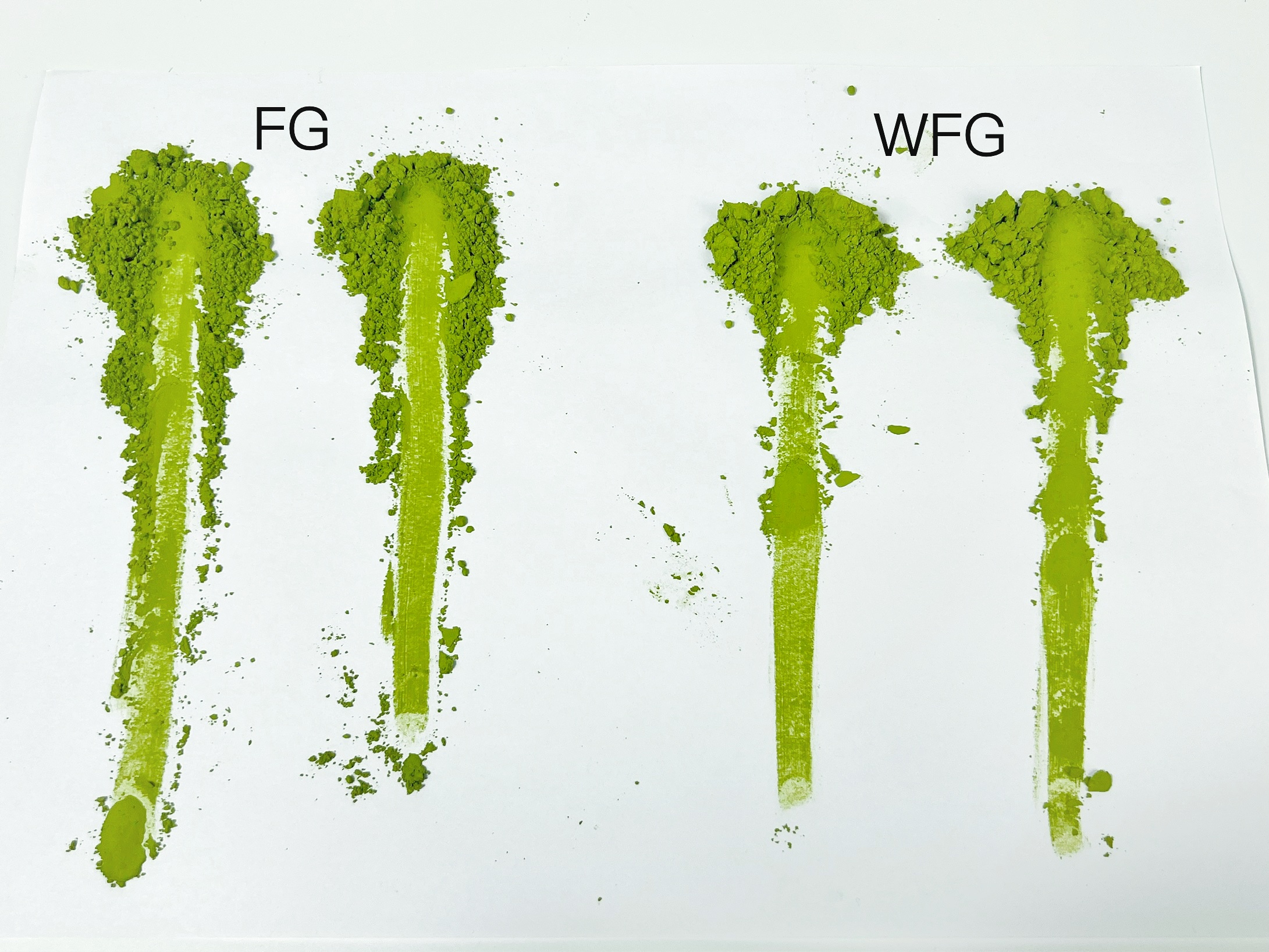
Core Conclusion: Mesh size and powder particle size (D50) are both indicators of fineness, but mesh size does not equal the actual particle size, and it certainly doesn’t represent the overall quality of matcha. Mesh size only indicates whether the powder can pass through a certain screen; what truly determines the taste, dispersibility, foam, and suspension is the laser-measured particle size (D50 in microns).
1. Two Concepts: Mesh vs Powder Fineness (Particle Size in μm)
1.1 Mesh (Number of Holes)
Definition: The number of openings per inch of screen. Higher mesh numbers mean smaller openings.
Examples: 100 mesh, 200 mesh, 400 mesh, 800 mesh, 1000 mesh, 2000 mesh.
- 400 mesh: opening about 37 μm
- 800 mesh: opening about 19 μm
- 1000 mesh: opening about 13 μm
- 2000 mesh: opening about 6.5 μm
Key Limitation: Mesh testing only shows whether powder can pass through the screen; it only measures the maximum particle size and cannot reveal the overall particle size distribution.
Example: A 2000-mesh matcha means all particles are smaller than the 2000-mesh openings (<6.5 μm). However, another sample marked 2000 mesh can have a completely different distribution: some may mostly cluster around 5 μm, while others may contain a lot of ultra-fine dust. Mesh only controls the upper limit of coarse particles and doesn’t tell us the average fineness.
Common Misunderstanding in the Industry: Suppliers directly labeling matcha as 2000 mesh makes many buyers think all particles are 6.5 μm, which is wrong.
1.2 Laser Particle Size: D50 (Average Fineness, μm)
D50 is the core indicator genuinely used in the matcha industry to judge fineness: D50 = 50% of the particles are smaller than this value, representing the average particle size.
- Ceremonial grade: D50 5–10 μm
- Café latte grade: D50 8–12 μm
- Baking / Ice cream: D50 10–18 μm
- Industrial food grade: D50 15–25 μm
Summary of Relationship: Mesh shows the maximum particle size (if there are coarse bits); D50 shows the overall average fineness. Both indicators should be used together.
2. Relationship between mesh size, fineness, and mouthfeel, dispersibility, and application effects
2.1. Mouthfeel (grittiness)
Smaller D50 (finer powder): Smooth mouthfeel with no gritty particles. For tea ceremony matcha, D50 is 5–10 μm, giving a soft, creamy mouthfeel.
Larger D50: Grittiness is more likely, especially in fat/frozen systems like chocolate and ice cream, where the gritty sensation is amplified.
Role of mesh size: Mesh controls oversized coarse particles. Even if D50 is good, if a few large unground particles exist, noticeable grit can appear. Increasing the mesh size (sifting) can remove coarse particles.
Key point: Just increasing the mesh size without changing D50 only removes big particles; it doesn’t make the overall powder finer.
2.2. Dispersibility and suspension (most critical for matcha lattes and smoothies)
Finer powder (lower D50): Larger specific surface area, easier to wet and disperse in water, longer suspension time, slower sedimentation, easier to foam, with dense and lasting bubbles.
Drawback: Ultra-fine powder easily absorbs moisture, clumps, and produces a lot of dust. If added to water improperly, it forms dry lumps that are hard to break apart.
Mesh size: Sifting can break up some clusters and remove coarse particles, but can’t improve suspension; suspension depends on D50 and powder surface properties.
Example: Two batches of matcha sifting through 1000 mesh. Batch A D50=9 μm: suspends well, good for lattes. Batch B D50=16 μm: even though it passes 1000 mesh, average particle larger, settles in a few minutes in a latte. → Same mesh, very different performance.
2.3. Different scenarios and requirements for mesh size and fineness
1) Tea ceremony matcha: D50 5–10 μm; mesh ≥2000. Goal: delicate, smooth, easy to froth thick foam, no coarse residue. No need to go ultra-fine; too fine clumps and makes tea whisking harder.
2) Tea shop matcha latte: D50 8–12 μm; mesh ≥1000–1500. Goal: stable suspension, no grit; mesh removes coarse particles to prevent straw clogging.
3) Baking (cakes, cookies): D50 10–18 μm; mesh ≥800. Doesn’t need super-fine powder; just enough to mix evenly with batter, no coarse residue. Ultra-fine powders are costlier, absorb moisture, form clumps, and make mixing harder.
4) Chocolate / ice cream: D50 10–16 μm; mesh ≥1000. Fat systems are sensitive to coarse particles, need fine mesh to remove large particles and avoid grit.
5) Bulk food ingredients (meal replacements, cereal bars): D50 15–25 μm; mesh ≥400–800. Cost first; just remove oversized particles. Low requirements for suspension or smoothness.
3. Why Sieve Size Alone Can't Represent the Overall Quality of Matcha
Sieve size is just a physical measure of particle size and completely fails to reflect these core factors that determine matcha quality:
1. Raw Material Grade (Tencha Quality) Two matchas with the same 2000-mesh sieve size: one made from high-grade shaded tender tencha, the other from coarse, older tencha. The fineness is identical, but the color, freshness, bitterness, and aroma are worlds apart. Fineness is just a result of grinding and can't fix flavor defects in the raw material.
2. Color and Color Stability (Heat/Light Resistance) Sieve size only measures particle size; it doesn't show chlorophyll content and can't predict if the matcha will brown quickly after roasting or exposure to light. A super fine matcha might look green at room temperature, but turn yellow when baked, making it unusable in roasting scenarios.
3. Aroma and Taste (Freshness, Bitterness, Hay Flavor) Grinding fineness doesn't change the basic flavor. Even if the powder is extremely fine, if the tencha is coarse and old, it will still have hay-like flavors and heavy bitterness.
4. Particle Size Distribution Even with the same sieve size, distribution can vary:
Narrow distribution: uniform particle size, stable in use;
Wide distribution: lots of ultrafine dust and some medium particles, prone to clumping and dust issues. Sieve size can't differentiate this.
5. Powder Oxidation State Super fine high-mesh matcha oxidizes faster. Even with a very high mesh size, improper storage can lead to yellowing and the loss of fresh aroma. The sieve size metric can't show oxidation or aging.
In short: Sieve size only ensures 'no big chunks,' but it cannot guarantee raw material quality, flavor, or color stability.
4. Practical Procurement Suggestions (to Match Your Matcha Evaluation System)
1. Don’t just write the mesh number in your procurement specs. Make sure the contract also specifies two things: the mesh size (to control the largest particles) and the laser particle size D50 (average fineness), to avoid any supplier trickery.
2. Watch out for suppliers who only list a high mesh number but don’t provide a D50 report. Many suppliers claim very high mesh numbers, but the D50 is actually large—they just sifted out coarse debris and didn’t fully grind it.
3. Choose fineness based on needs—don’t blindly chase the highest mesh number or smallest D50. For baking or mass food production, you don’t need 2000-mesh ultra-fine matcha. It’s expensive, prone to clumping, and overkill performance-wise.
4. Sensory and application tests are still a must. Even if the fineness meets the standards, you still need to check: dry powder color, aroma, brewing test, baking/frothing actual performance. Meeting fineness alone doesn’t mean the product is workable.
5. Sample sealing: Keep the particle size report when sealing samples, which can be used as a reference for bulk acceptance.
Quick Summary:
1. Mesh controls the largest particles to remove coarse debris; D50 is the average particle size, which determines overall fineness, suspension, and smoothness. Use both indicators together.
2. Finer particles mean better smoothness, froth, and suspension, but also higher risk of clumping, oxidation, and cost.
3. Mesh is just a physical particle indicator; it doesn’t show raw material quality, aroma, taste, or heat/color stability, so it can’t be used alone to judge matcha quality.
4. Selection logic: first confirm the end use, then set the acceptable D50 and mesh range, and finally conduct real tests for flavor, color, and functionality.