
Tea Knowledge for Better Sourcing
Practical insight into tea quality, production, certification and export readiness.
Matcha Selection Guide for Different Scenarios: Plain Drinks, Lattes, Baking, Ice Cream, Chocolate,
Food Processing
Core Principles: Each application has its own performance criteria; do not mix matcha across different scenarios. Ceremonial tea drinking focuses on flavor; beverages focus on fineness and suspension; baking emphasizes heat resistance and color retention; bulk food ingredients prioritize controllable cost. Four universal evaluation dimensions: color, taste, fineness (particle size D50), cost.
Reference Particle Size Standards:
- Ceremonial: D50 5–10 μm
- Café latte: D50 8–12 μm
- Baking / cold dishes: D50 10–18 μm
- Industrial food raw materials: D50 15–25 μm
1. Plain Tea (Ceremonial / pure tea)
Usage: Whisked with a tea whisk, consumed directly without milk or sugar to appreciate matcha’s own flavor.
Color: Soft and fresh green, uniform; no need for fluorescent bright green. Natural tea tones are allowed, just avoid yellow-brown or uneven colors. Overly vibrant matcha often tastes thin.
Taste: Fresh, savory seaweed/kombu sweetness, low bitterness, notable aftertaste; must avoid hay-like, burnt, or stale taste. Amino acid content is key.
Fineness: D50 5–10 μm. Fine enough to produce thick, long-lasting froth; powder must not be too coarse (foam breaks easily), but extreme ultra-fineness isn’t necessary as it clumps and makes whisking difficult.
Cost: Highest tier. Uses top-quality shaded stone-ground tea, strictly selected. Expensive and limited yield.
Suitable for: High-end tea ceremonies, specialty stores for pure matcha drinks; not recommended for baking due to high cost.
2. Tea Shops / Matcha Latte (Matcha latte, smoothies, sparkling matcha)
Usage: Café or tea shop, mixed with water or milk to make hot or cold drinks. Customers can see the color clearly; long-term suspension is required.
Color: Bright green; uniform color after preparation; minimal difference between hot and cold brewing. Doesn't need the delicate layers of ceremonial tea, but visual appeal is important.
Taste: Clean matcha aroma with mild freshness; bitterness must not be strong (milk amplifies bitterness). No need for complex seaweed aroma; just avoid hay or aged flavors. Flavor may be masked by milk or syrup.
Fineness: D50 8–12 μm. Fineness is the top priority, ensuring suspension and reducing sediment at the cup bottom. Coarser matcha sinks in minutes and causes complaints.
Cost: Medium. Commercial beverage grade, prioritizing cost-performance ratio. Doesn’t require top stone-ground tea, but raw material must be stable with minimal color variation between batches.
Note: Do not use expensive ceremonial matcha for lattes; the flavor advantage is lost in milk, only increasing cost unnecessarily.
3. Cakes, cookies, muffins, and other baked goods (high-temperature baking)
Usage: Batter is mixed and baked at high temperatures of 160–190°C.
Color: Focus on heat-resistant color retention, not how green it looks at room temperature! Matcha that looks bright green at room temperature can quickly turn brown or yellow after high-temperature baking. Choose matcha that stays a stable dark jade/olive green after baking.
Flavor: Must withstand high heat without developing grassy or burnt flavors; freshness requirements are lower than for tea ceremony or latte, just need clear matcha aroma after baking.
Texture: D50 10–18 μm. The powder just needs to disperse evenly in the batter. Ultra-fine powders are not necessary; they can absorb moisture, clump, be hard to mix, and cost more.
Cost: Medium-low. Prioritize color retention, raw material grade is lower than tea ceremony or café latte level.
Procurement testing must include small-batch baking tests, not just checking dry powder color.
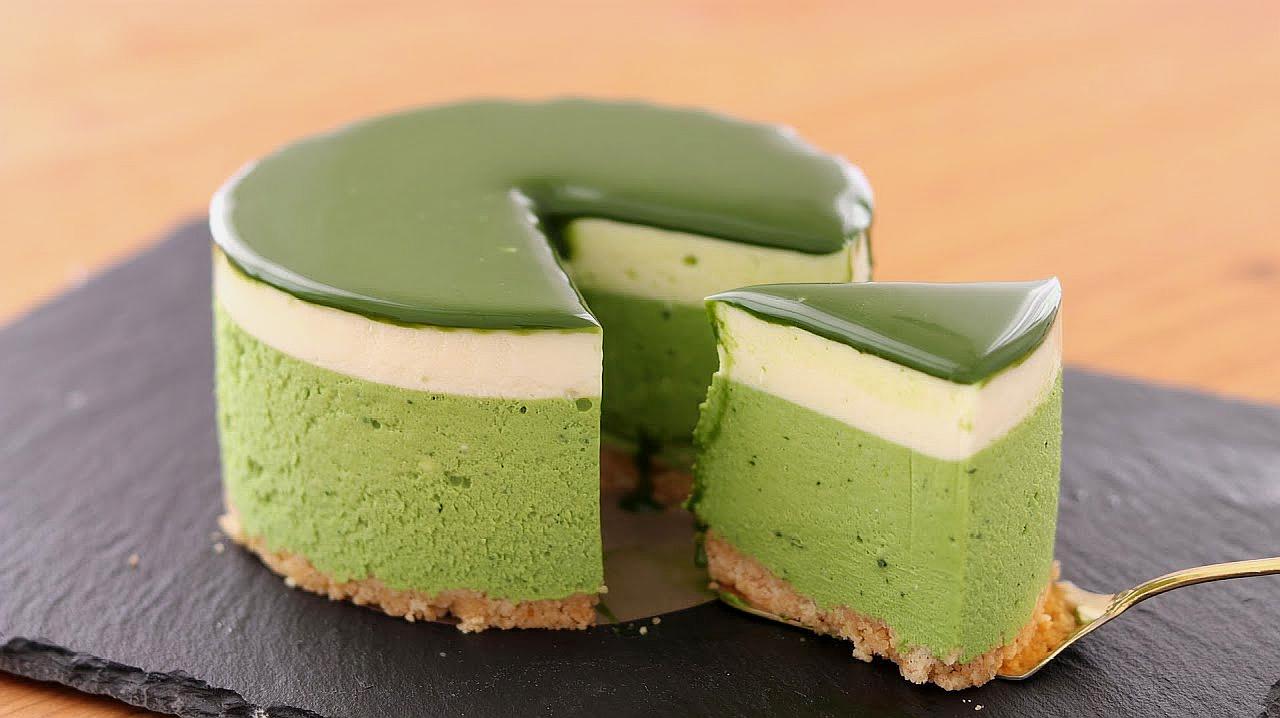
4. Ice cream, panna cotta (low-temperature cold processing)
Usage: Low-temperature system, no high heat baking needed; powder mixed into cream base and frozen.
Color: Bright and even green, doesn’t fade easily after freezing, and shouldn’t change quickly when thawed.
Flavor: Fresh and mild matcha flavor, must not be overly bitter; freezing weakens aroma, so flavor intensity needs to be decent.
Texture: D50 10–16 μm. Powder should be fine and smooth, no sandy feel in the mouth; prevents small gritty particles in ice cream. Medium suspension required, not as strict as lattes.
Cost: Medium. Between baked goods and lattes. Cold processing avoids high-heat damage, so color retention is easier than baking.
5. Chocolate (tempered or coating chocolate)
Usage: Mixed with cocoa butter, requires 30–35°C tempering, in a fat-based system.
Color: Uniform jade green, shouldn’t turn grey when blended with fat; fat coating changes visual color, so must be tested in fat system.
Flavor: Matcha aroma must be compatible with cocoa flavor; no coarse or grassy taste; bitterness should be mild.
Texture: D50 10–16 μm. Powder must be fine enough to avoid gritty texture in chocolate; dispersion in fat is crucial.
Cost: Medium. Requires higher flavor purity than regular baking.
6. Bulk Food Ingredients (Meal Replacement Powder, Cereal Bars, Candy, Flavor Bases)
Usage Scenarios: Large-scale industrial production. Matcha is used mainly as a flavor and color additive, and its taste will be largely masked by other ingredients.
Color: Basic green, allowing for yellowish-green tones. As long as batch-to-batch color variance is stable, bright, vivid green is not necessary.
Taste: Basic matcha flavor, no off-flavors (like hay, mold, or burnt). Freshness and aftertaste are the lowest priorities.
Fineness: D50 15–25 μm. Just needs to mix evenly in dry powders; too fine creates dust, making factory handling harder and more costly.
Cost: Lowest tier. Prioritize price and batch consistency, using food-grade milled tea materials.
Use case | Color requirements | Taste requirements | Fineness | Cost tier | Core Key Metrics |
Light Drinks / Tea Ceremony Tea Making | Soft and fresh green, with a natural tone | Fresh and savory, with the sweet aroma of seaweed, and low bitterness | 5–10 μm | The best | Fragrance and foam longevity |
Matcha Latte / Tea Shop | Bright green and mixes evenly | Clean matcha aroma, moderately bitter | 8–12 μm | Medium | Suspensibility, not easy to settle |
Cakes and Cookies Baking | Color stays stable after baking | Heated, without the hay stuffy smell | 10–18 μm | Medium-low | Heat-resistant and anti-browning |
Ice cream, custard | Keeps a bright, fresh color after freezing | Soft and fresh, without any heaviness | 10–16 μm | Medium | Smooth texture on entry |
Chocolate | The oil blend doesn't turn gray and is evenly green. | Flavor pairs well with cocoa, pure | 10–16 μm | Medium | Good oil dispersion, no gritty feeling |
Bulk food ingredients (meal replacement / candy) | Basic green, batch stable | No strange smell, basic matcha flavor | 15–25 μm | Lowest | Cost and dry powder mixing performance |
Key Practical Points for Procurement Review (to match the previous tea sample evaluation system)
1. You must do application sample testing, not just look at the dry powder: for baking, bake a small sample; for lattes, mix according to the real milk ratio in stores and let it sit to observe sedimentation; for chocolate, mix with cocoa butter to test dispersion.
2. Don’t substitute across scenarios: using ceremonial-grade matcha for baking wastes cost; using industrial food matcha for lattes makes the color dull and causes heavy sediment, leading to bad reviews from customers.
3. Batch stability is more important than a single sample looking good: confirm color values and particle size test reports for each batch from suppliers.
4. Storage risk reminder: the finer the powder, the faster matcha oxidizes; high-grade matcha needs faster inventory turnover, and packaging should use nitrogen-flushed, light-blocking aluminum bags.
Brief summary:
Clear tea: flavor comes first, fineness is for frothing, color just needs to look natural.
Milk tea / latte: fineness and suspension are key, color should look good for selling.
Baking: heat resistance and color retention are first, green color at room temp is of limited reference value.
Ice cream / chocolate: fineness ensures no grittiness, flavor should be compatible with the base.
Bulk food ingredients: cost first, basic sensory quality is enough.